
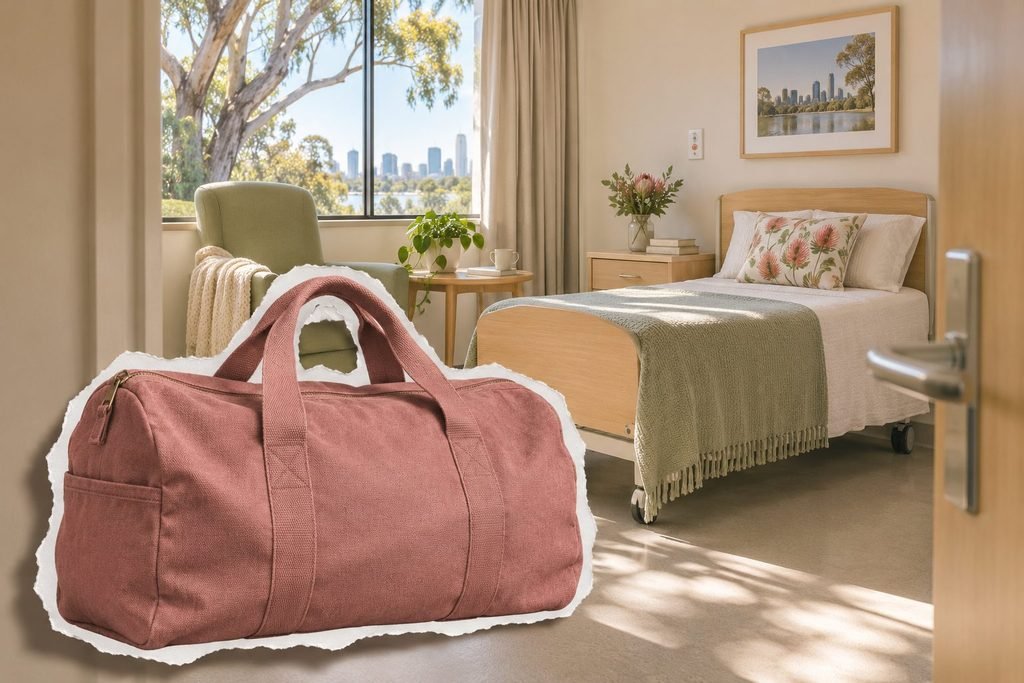
“Leave the bag there. I’m going home soon.”
I’ve heard that more than once in the aged care home where I work in Perth. Some people understand their stay much as they would a hospital admission. They’ve been unwell, people are looking after them, and when they feel better they expect to go home. Of course they want to leave the bag packed.
If you’re moving a parent into aged care, you may already have brought Mum’s favourite pillow and folded her blanket at the foot of the bed. I sometimes wonder how much comfort those things bring on the first day. Perhaps she’ll be glad of her own pillow tonight. For now, she’d still like to know when she’s going home.
I’ve worked in residential aged care since 2018. I couldn’t tell you how long it takes before someone means this room when they say “home”. In the meantime, there’s breakfast.
Breakfast at eight, morning tea at ten
Many of the people I meet have run their own households for decades. Long after the children moved out, Mum still decided when to get up, what to eat and whether she felt like seeing anyone that day. Some people come to us when their memory begins to let them down. Others can tell you exactly how they like their morning to go. It’s getting safely out of bed and into the shower that’s become difficult.
Some already know a few of us from a short respite stay. Others spend moving day meeting one friendly stranger after another. We all want to introduce ourselves and find out how they like things done. It’s quite a reception for someone who used to have the whole morning to herself.
Breakfast is at eight. At ten, we bring round morning tea. At twelve, somebody comes to say lunch is ready. “Are we eating again?” I hear that one quite a bit.
There’s a hair salon here, and a gym. A pastor comes each week to lead a service. The bus trip is a big occasion. My favourite sight is a few women settled in the lounge over morning tea. They remind me of the women back home dropping in on a neighbour for a chat. You could pull up a chair, but you’d have to catch up on what you’d missed.
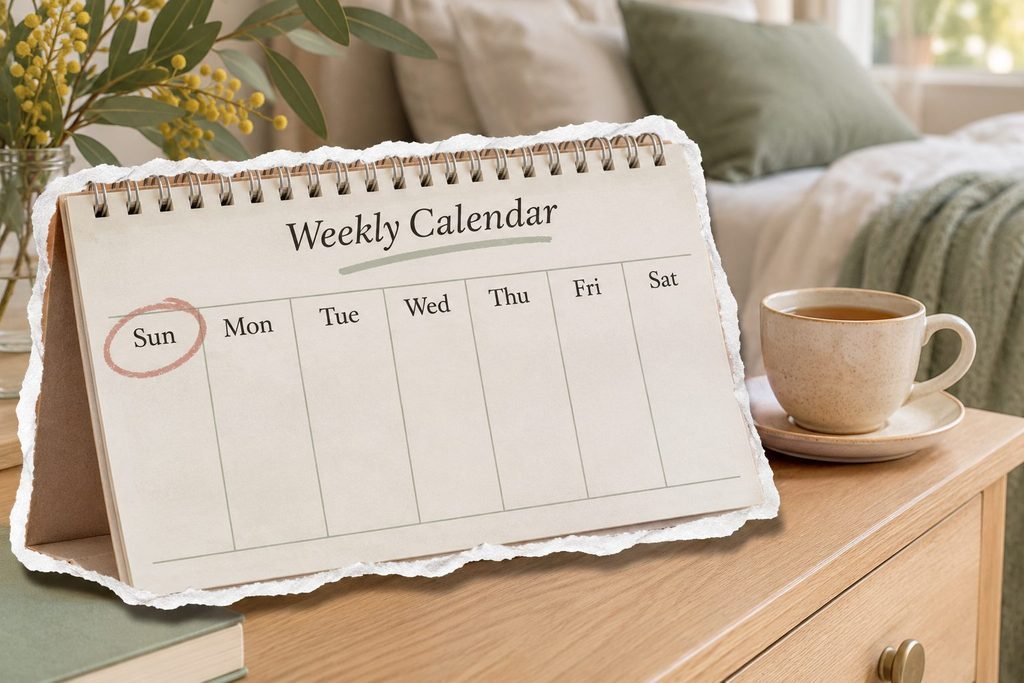
Sunday is the day my daughter comes
There’s a great deal of waiting in a nursing home. For some of the people I care for who live with dementia, an earlier part of life feels very close. A woman waiting for her dad to collect her is, in that moment, his young daughter. Another needs to catch the bus home. Her children will be wondering where she is, and who’s going to give them their tea?
A mother might wait for a son who lives overseas. She hasn’t seen him in ten years. In her memory he’s still a young man, though he’s grown older, too. And sometimes a husband and wife have lived here together. After one dies, the other still looks towards the door, expecting them to come in.
“What day is it?” must be one of the questions I hear most at work. This is where a family can give me a hand. If Sunday morning is the day you come to see your mum, please tell us. And if there’s something special happening this Sunday, I’d love to hear about that, too.
Say Mary is unsettled and asks me what day it is. Because her daughter has told me the plan, I can sit beside her and say, “It’s Friday, Mary. Two more sleeps and your little great-grandson’s coming to see you. Your daughter told me.”
Mary may ask me again in a few minutes. I can tell her again. For those few minutes she has the pleasure of thinking about the baby. A Sunday visit gives her something lovely to do on a Friday, too. She can look forward to it.
Who is Mary?
On a busy morning, my thoughts can run something like this. Mary needs a hand with her shower at nine. John’s hospital appointment is at eight and his son will be here at half past seven. Have I checked with the kitchen about an early breakfast?
I can get a fair way through a shift thinking of John in terms of that breakfast and Mary in terms of that shower. Then I go into Mary’s room and see the page our staff have put on the wall. Who is Mary?
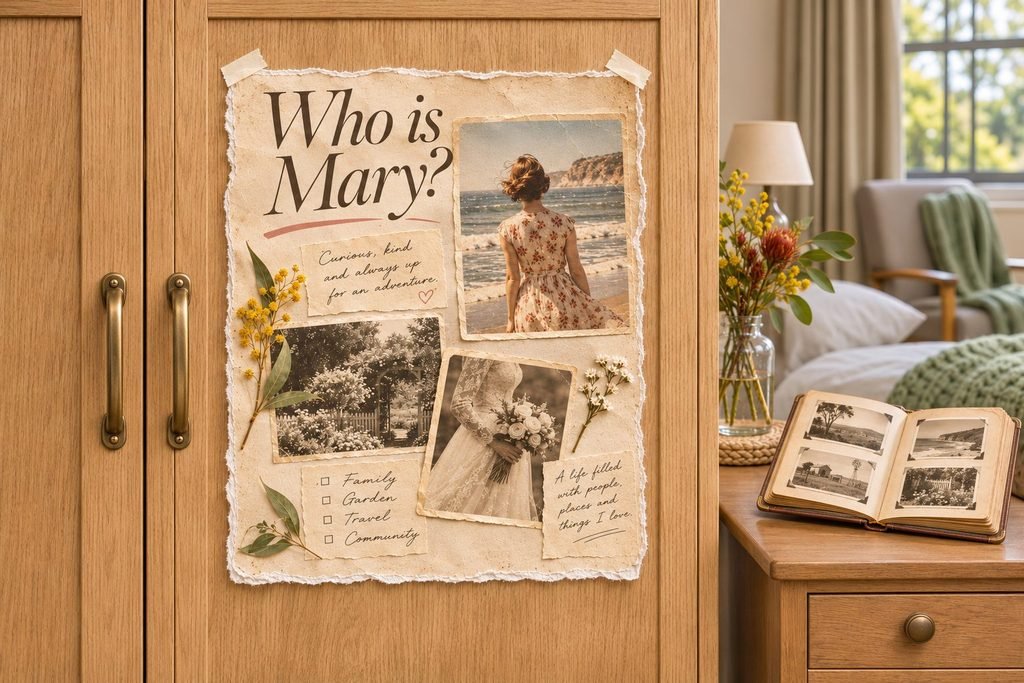
People rarely sit you down and tell you their whole life story. That one page gives me a few clues. Where Mary grew up. Whom she married. What she did for work. A place she travelled to and still talks about. Next time we’re getting ready for the day, there’s something we can talk about besides whether the water’s warm enough.
How many does that make?
I might ask about her children. The grandchildren come into it, and then it turns out there are great-grandchildren as well. “Hang on, Mary. How many does that make?” She might have forgotten the name of the little girl born last week. But listen to the pride in her voice as she works her way down the family tree. All these people, and here’s their mum, their gran, their great-gran, sitting beside me.
I think of myself a little differently after that, too. Mary has a whole life behind her. Somewhere in its later pages, there’s me, helping her get ready on a Friday morning.
Tip: If you have a family photo your parent loves, bring it in. Write the names on the back. Then when your mum mentions her sister, one of us can pick up the photo and say, “Is this the sister you mean?” For your next visit, you might also like 52 Questions to Ask Your Parents or a free printable conversation card.
“Don’t get old, Esther”
On my first nursing placement in South Korea, I kept seeing my own mum and dad, my own grandparents, in the patients I met. I worried I was too emotional to be a good nurse. Years later, in a nursing home in Perth, the people I look after still remind me of my parents. Perhaps that’s part of why I’ve stayed.
I’m a storyteller at heart. There have been days in Australia when I’ve felt so worn down and so far from home that the thought has hit me hard. Why did I come all this way to have such a hard time here?
Then a resident tells me something from years ago. As they talk, I can see it all happening. I love that part of my work. Someone I met because they needed a hand getting through the day has let me see a whole scene from a life I’d otherwise never have known. On days when I feel very small, I think about how much there is to an ordinary life. Mine included. That’s why I want to write these Nursing Notes.
“Don’t get old, Esther. It’s awful.”
The women I care for
There’s a lot in that awful. For some, it’s waking up sore and knowing they’ll still be sore at bedtime. It’s missing someone all day. Or it’s needing the toilet and losing track of what you got up to do. When one of the women says it with half a laugh, I can hear how fed up she is.
I pull a long face. “How, though? It’s already happening to me!”
Then the two of us laugh. I’m getting old too, and she and I both know it.
With love, Esther
Support for families in Australia
- For help finding aged care services, call My Aged Care on 1800 200 422. My Aged Care
- For independent advice about a concern with your parent’s care, call OPAN on 1800 700 600. OPAN
- For support or counselling for yourself as a carer, call Carer Gateway on 1800 422 737. Carer Gateway
Mary and John are illustrative names. I write from my experience as an aged care worker in Perth. I trained as a Registered Nurse in South Korea and hold a Diploma of Nursing from Australia. I’m not currently registered with AHPRA, so nothing here is clinical advice. This article is general information. Read the Disclaimer.